Sign in to follow sections, save articles, and get notifications.
War for EuropeNo. 227·Jul 20, 2026
Updated Jul 20, 2026
The tunnel of war: the glimmer of exit light or avalanche of fire over there?
What is the potential of endurance, which ukrainian society still has in the seemingly neverending war with Russia and ever-growing russian aerial terror?
Reading time1 min
What is the potential of endurance, which ukrainian society still has in the seemingly neverending war with Russia and ever-growing russian aerial terror?
Such question is pointless, because ukrainian society has no other option, than to resist and fight – if ukrainians want to live and to live in Ukraine.
That is the take of prominent journalist and analyst of Ukraine Vitalyi Portnikov, who shared it in the conversation with “Arch Frontline".
Instead, he questions, what is the readiness of societies of Poland or Baltic countries to face Russian missile or drones attacks, also being abandoned by major NATO ally – US.
On the other hand, Portnikov does not see such attacks in our region as imminent, neither he predicts nuclear escalation here. But, strategically, he has in sight another danger – the spread of wars all over the world, when major dictatorships join forces in unleashing the global destruction.
The war's dynamics
How do you assess the dynamics of the war, of this whole global upheaval, this geopolitical conflict? One narrative that has become very popular both in the West and in Ukraine itself is that Ukraine has finally managed to turn the tide of the war — not only at the front, but in general, so to speak, on both sides of the frontline. Meaning that the Russian dictatorship is now backed into a corner and has found itself in an essentially hopeless situation. And all this aerial terror is a likewise symptom of the Russian regime's desperation, as are all its threats along the entire perimeter, to everyone around it — threats of escalating the conflict, of nuclear strikes. What is your assessment?
— I think that when we talk about the timeline of the war, no realistic forecasts can be made today.
Many of us, it seems to me, have short memories. In the summer of 2025 there was practically the same aerial terror against Kyiv and other Ukrainian cities as this year. There were the same threats — of using nuclear weapons, accusations against the Ukrainian authorities. Just as there are now. If we compare the summer of 2025 with the summer of 2026, the spring of 2025 with the spring of 2026, we will see that nothing has substantially changed in reality — not in our assessments and reports, I would say, but in reality. The Russian army continues its offensive. In some places the Ukrainians manage to stop that offensive, in others they do not. The offensive is simply very slow.
It is proceeding just as it did in 2025. Strikes on Ukrainian infrastructure also continue. Many are already saying that the coming winter of 2026–2027 may be the hardest in the entire history of the war. It may be harder than the last. We do not know that either. These, too, may be forecasts that fail to come true, because every year people talk about hard winters, and Ukraine survives them. But it is clear that Russia will keep shelling Ukraine's energy sector and doing everything possible to freeze Ukraine even further. That is also clear. So from this point of view, I do not see any distinct changes — apart from our own wish for it to end sooner.
What has really changed? Ukraine can now, with the drones or even missiles it possesses — both its own and Western-made — strike the territory of the Russian Federation itself. This is something that did not exist last year. Ukraine is hitting oil refineries, military-industry enterprises, oil ports. That is very important. And at the same time we must understand that we do not know the real cost of the damage.
That is, we would like to think it is huge, that the Russian Federation is losing a great deal. That much is obvious. But we do not know exactly how quickly Russia can restore its capacities, say, at enterprises of the military-industrial and oil-refining complex. In other words, we do not know what genuine damage these drones and missiles are inflicting.
We receive reports of fires, we see that something is burning, but we know neither the exact point of impact, nor the results of the fires, nor which workshops have been knocked out and which are operating, nor how quickly a facility is being restored. All of that we do not know. We simply know that targets were hit, right? That does not give us any objective assessment either.
Yes, of course, we see and understand that this creates certain problems for Russia — above all for the economy and the population. But that is all.
Why do I say this? Because in fact no real information about what is happening exists — apart from our wishful thinking. And there is one more thing that differs from 2025. It is the war of the United States and Israel against Iran. It is the closed Strait of Hormuz. And it is the fact that Russia has practically gained the ability to slip out from under the Western sanctions that restrict its oil sales. That is what has genuinely happened. Russia moved its tankers out to sea in advance and waited for this moment. One gets the impression they understood that such a war was coming.
And now the United States has been cancelling the licences — that is, the restrictions that would prevent the Russian Federation from selling oil to the countries of the Global South and other states wishing to obtain Russian energy resources. And as the energy crisis and the economic crisis in the world expand — practically inevitably unless the United States manages to reach at least some agreement with Iran — Russia will gain more and more opportunities like that. And the pressure on Russia through energy sanctions will not intensify, but weaken.
That is an additional factor. Ukraine is trying to limit Russia's capabilities by destroying oil ports and oil refineries, while at the same time the United States is effectively nullifying all these actions by helping Russia sell its energy resources. That, too, is a contradictory process.
So when we look at this realistically, we can say clearly: just as last year you and I did not know the pace and the timeline of the end of the Russo-Ukrainian war, we do not know it now either. We can hope that the economic situation that has taken shape in Russia will force the Russian leadership to think about ending the war. But there are no objective indicators that this will happen in the foreseeable future. They simply do not exist. Moreover, the United States has stated clearly that there is no negotiation process, that there is no progress. They have become convinced that Moscow is simply playing for time in this negotiation process. And they have effectively given up any modelling of the further course of events.
I, too, keep saying that the end of the war — or at least its suspension — depends on what Russia's economic potential will be. But I have no objective factors that could, how shall I put it, substantiate this position. And I have absolutely no idea how Putin himself views these problems of Russia's economic potential. What will Moscow do as the country's economic potential deteriorates, and what goals will it set for itself? Even if we imagine that in Russia they conclude that the war cannot be ended by seizing all of Ukraine, this may lead to a result completely opposite to our expectations.
If Ukraine cannot be captured, it can at least be destroyed — and only then can this war be ended: by destroying Ukraine's large cities and redirecting migration flows into Europe. The people fleeing those cities may simply fail to find a place for themselves on the territory of other countries, destabilizing Europe with migration flows.
And Europeans today are by no means as well-disposed toward Ukrainian migration as they were in 2022.
And in this way the Russian Federation may hope to end the war with, if not a military, then a demographic victory. I am not claiming this plan can be realized. All the more so — I repeat once again — I do not rule out retaliatory strikes which, in turn, would destabilize the situation inside the Russian Federation itself. But the prospect of this entire space, from Uzhhorod to Vladivostok, being turned into a landscape of ruins, and the prospect of a truce being concluded on the ruins of Ukrainian and Russian cities — that is an entirely plausible outcome.
After all, we are dealing with a type of Russian leadership that could not care less about Ukraine's civilians and has already concluded that Ukraine's civilians are its enemies, who have no business being here, next door to Russia. That same leadership could not care less about Russia's civilians either; it gladly uses Russia's civilians as a justification for destroying Ukraine. That is how I see further development of the situation. I see escalation, not a search for paths to reconciliation.
Stopping the Russian advance
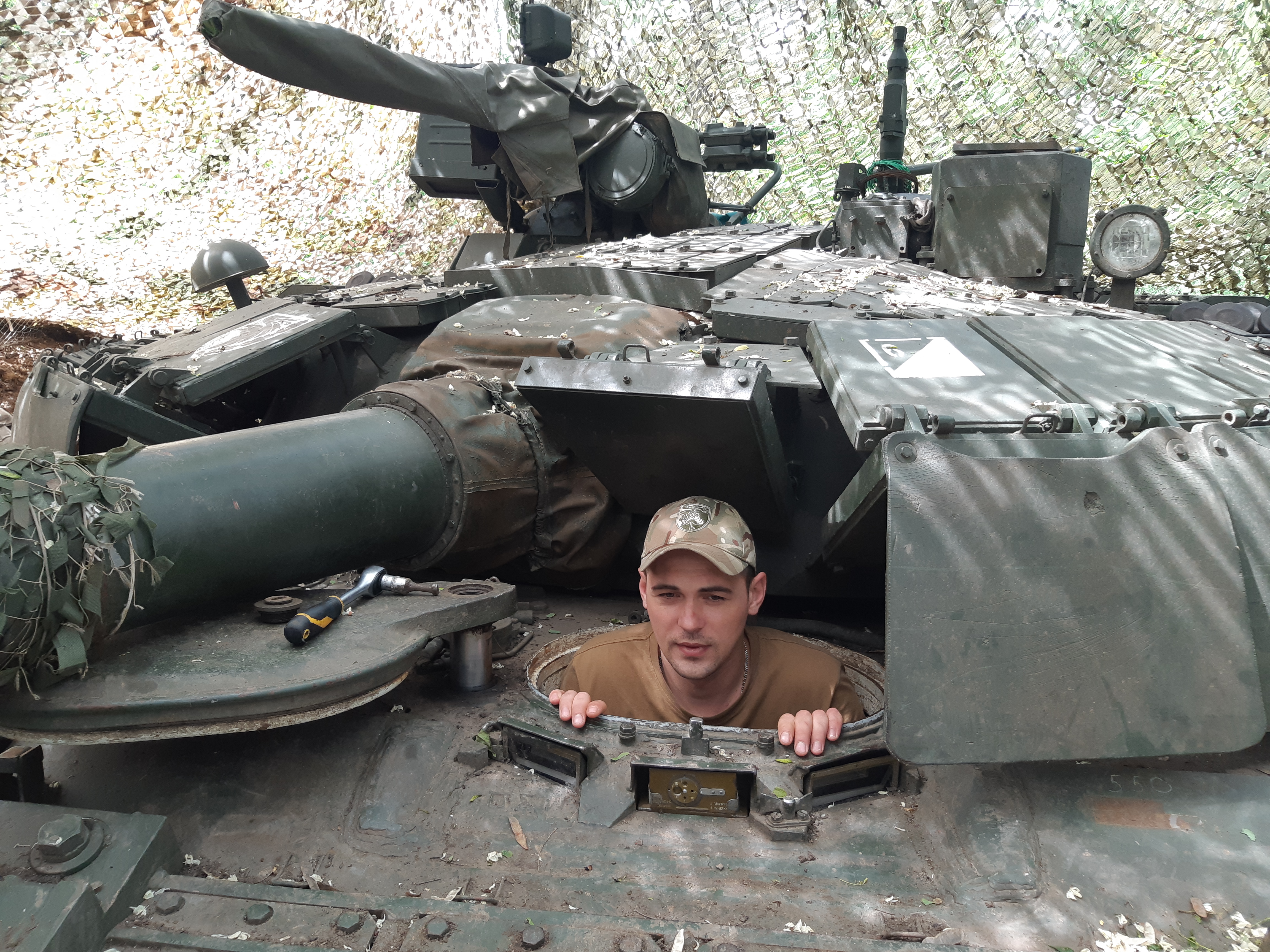
A Ukrainian tank crewman on the frontline.Vytautas Bruveris / Arch Frontline
Do you agree with the idea that one of the main factors, if not the main one, is stopping the Russian troops dead along the entire front line by sheer physical force? That when the Russian army is dug into Himalayas of its own charred flesh and metal, the regime's last and principal argument will finally be knocked out — the argument that the Russian army, despite everything, keeps advancing, which supposedly means it can still seize all of Ukraine, or most of its territory, by force?
— Yes, that is a factor. If the regime does not achieve success at the front, it tries to replace that success with diplomatic pressure — "we will stop the war when you withdraw from Donetsk region."
But on the other hand, I am certain that if Ukraine had to yield to that kind of pressure, the question would immediately arise that it must also withdraw from Kherson and Zaporizhzhia regions. I have no doubt about that.
The Russians are quite blunt in saying that they need not only Donetsk and Luhansk regions, but Kherson and Zaporizhzhia as well, since those, too, are "subjects of the Russian Federation."
— Exactly. But even with the front genuinely halted, there can still be the path of missile and drone strikes. Why can the war not continue? That is the question for me.
If you cannot advance at the front, why can you not replace this war with a war of missile strikes and drones?
Let us look carefully at the war of the United States and Israel against Iran. Did a single soldier take part on the ground there? And is that a war or not?
But let us imagine that the Ukrainian army has really managed to stop the advance of the Russian troops. It is hardly moving forward as it is. Yes, they crawl forward a kilometre here and there, but you can see it is a tortoise's pace.
Imagine the Russian army has stopped — it simply is not advancing; it has dug in and stands there. And there is an enormous front. And the missile strikes and drone strikes continue. Is that a war or not?
Yes, of course. And in such a situation, as you rightly pointed out, it will only intensify.
— What ways are there to stop this war, in that case?
Well, the erosion of the regime itself and its physical exhaustion, some kind of internal coup.
— But that is our wish, and it very much resembles the American wish to see the erosion of the Iranian regime. And the Russian regime is a very long way from the Iranian one.
How did Iran manage to stop the actions of the United States? The Strait of Hormuz turned out to be in its hands, right?
And that is how a certain consensus was established, even if a temporary one, whereby the two sides do not shoot at each other.
That consensus, as could have been expected, is now collapsing and may at any moment turn into a new war.
But the Strait of Hormuz in any case remains Iran's means of pressure on the United States. And massive attacks on Iranian military and industrial facilities are the United States' means of pressuring Iran. And so they found a compromise: we do not shoot at you, you do not shoot at us. We look for ways to open the strait. That was the situation.
Ukraine needs its own Strait of Hormuz.
Ukraine needs its own Strait of Hormuz.
Ukraine's endurance
And how would you assess Ukraine's capacity for endurance? Not only economic, energy-related and infrastructural, but societal as well. How do you see the state of the country?
— I do not assess the state of the society, because the society has no other way out.
Nobody is offering it any other way out than the present situation.
So when Ukrainians tell me they are tired, I tell them the choice is very simple: either you accept that you will be part of the Russian Federation, or you keep resisting.
Incidentally, this is another of Putin's strategic mistakes. He has not created a model of, so to speak, a "good Ukraine".
For example, in 1920 the Bolsheviks created for Ukrainians a model of a "good Ukraine". That is, they allowed Ukrainians to capitulate on the terms of the existence of their ersatz state — a state which a person ready to capitulate could believe in. A good Ukraine.
And that kind of recipe — substituting a sham statehood for real statehood — worked. Incidentally, it was devised not only for us; it worked for Lithuania too, if you will excuse me, in 1940, and in 1945. I remember very well a wonderful phrase from some book, that from 1940 to 1991 our country's statehood "was exercised in the form of a union republic."
Yes, our entire post-communist nomenklatura, which came to power in the country almost immediately after the restoration of independence, used that same narrative. It was the main theme and the title of the memoirs of the first president of independent Lithuania, Algirdas Brazauskas, who had been the country's chief communist.
That book was titled We Worked for Lithuania Back Then, Too.
— Yes, let us suppose so. Well, Putin's problem now is that he offers Ukrainians no such alternative.
Our occupied territories are declared to be Russia. The Ukrainians who live there are declared to be Russians.
So when we speak about the society — the society has no particular choice.
And to flee, to emigrate?
— Well, listen — the people who wanted to emigrate have most likely already done so. We are now talking about the people who are here, right?
If these people want to remain here and want this to be Ukraine, they will have to resist. If they do not care where they live and what they do, then they have no need to be here, do they? They really could emigrate. So precisely because there is no realistic, attractive scenario, we are forced to state a fact: whatever the condition of this society may be, it is compelled to fight.
It is understandable that people are weary of the war, just as it is understandable that people feel nostalgia for peaceful life. It is understandable that they do not want to come to terms with the idea that this peaceful life may not come in the coming years. But nevertheless, simply being here they are already choosing that fate — be it consciously or not.
You spoke of a "truce on the ruins." When I think about the possible culmination of this war, which keeps escalating, I see that not only Ukraine and Russia, but our entire region could become a zone of destruction – perhaps even nuclear. How do you see this?
— With today's technologies I see no sense whatsoever in using the nuclear component, for one simple reason: today, with missiles of various types and with drones, one can achieve an impressive result without the political risk of using strategic nuclear weapons. And for the neighbouring countries there is also the danger that the impact zone would include the territory of the country from which the launch is carried out.
The use of tactical nuclear weapons changes nothing substantial. And most importantly, I see no sense at all in even talking about it, for one simple reason: we have not even lived to see the start of nuclear testing. This, of course, should be discussed with military experts, not with me. But it seems to me that a nuclear strike without nuclear tests is impossible from a purely technological point of view, because it poses a risk to the launching country. The Russian Federation has never conducted nuclear tests in the entire history of its existence. The last nuclear test was conducted by the Soviet Union at Semipalatinsk, in Kazakhstan. For the Russian Federation to move from mere talk about nuclear weapons and the simulated nuclear exercises now held on the territory of Russia and Belarus to actual deeds, it would have to at least attempt to conduct nuclear tests. At least on Novaya Zemlya, where they could at least be carried out underground. That has never been done. Never at all.
We live in a world where we talk a great deal about nuclear weapons, but this nuclear weaponry has for many decades now not been tested by anyone. The United States does not conduct tests, but at least it has that test site in Nevada. Russia does not conduct tests, although theoretically it has that site on Novaya Zemlya. France conducts no tests, and it has no test site at all. We keep telling ourselves that France could be a nuclear umbrella for Europe, yet France does not even have a place to test nuclear weapons. It physically does not exist. There is only our talk.
And we keep imagining nuclear weapons as something like an ordinary revolver cartridge, only very big — you take it and fire. No, that is not how it works.
Until we understand that nuclear tests have begun somewhere, there is not much sense in talking about it.
Well, and if they do begin, then Europeans will have to tell themselves honestly that they are defenceless — because France, with its nuclear potential, cannot conduct nuclear tests. And if the United States does not want to be Europe's nuclear umbrella, that means the European countries are practically defenceless before Russia. That is the whole truth.
The Article 5 test
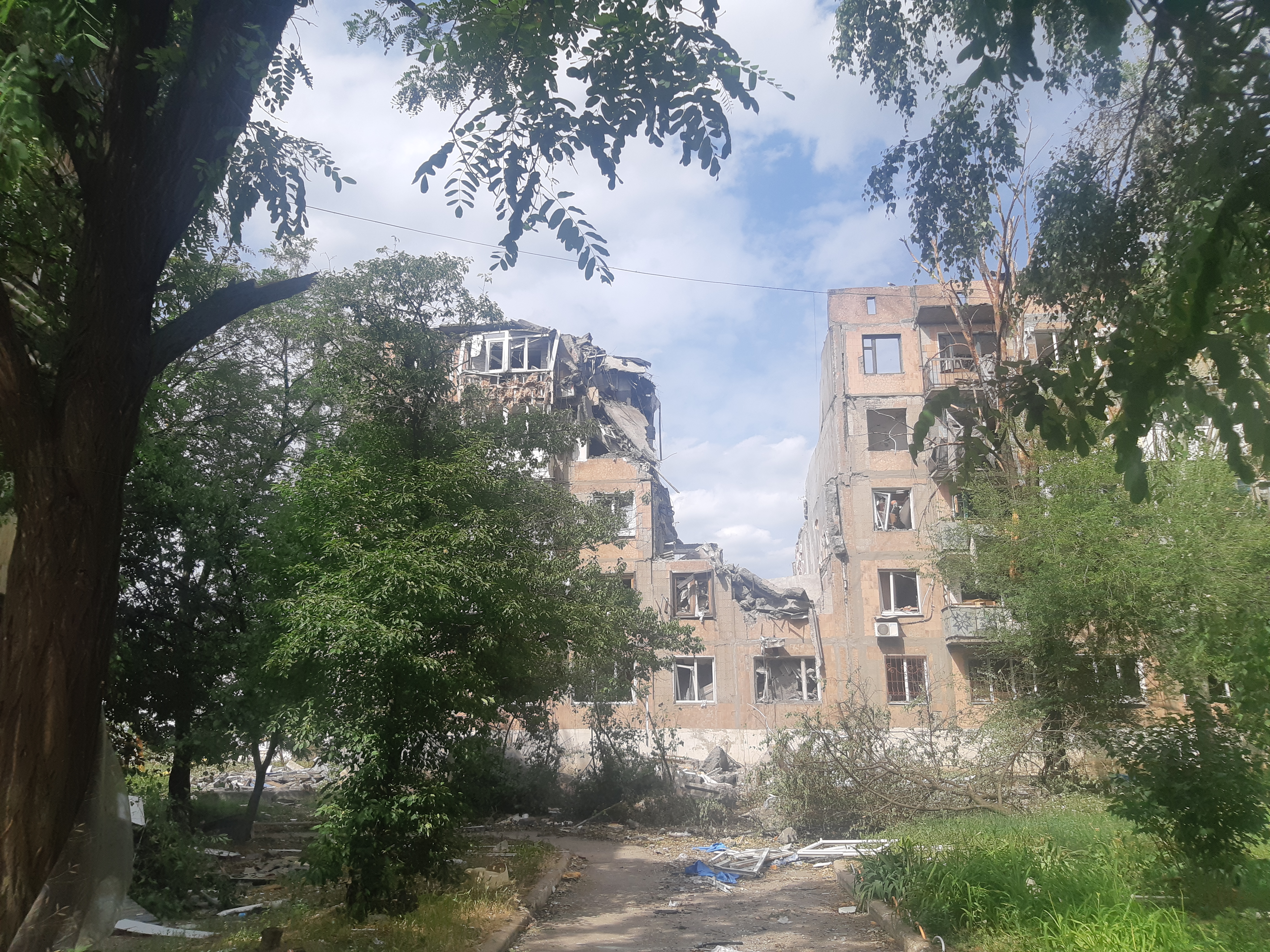
Mines warning sign — a marker of Russias territorial threat to civilian life in Ukraine.Vytautas Bruveris / Arch Frontline
How do you assess the possibility that the Russian regime, which in any case needs to escalate and to raise the stakes, might test NATO's Article 5? For example, with aerial missile aggression against the Baltic states?
— As of today, I do not see in Russia a readiness to act in that way. I stress — as of today.
But where you are indeed right is that some form of aggression against NATO countries could occur through the appearance of drones or missiles. For example, strikes on facilities that would be declared to be facilities used by Ukraine, or used to help Ukraine. Is that possible? I fully allow that it could happen, and it does not require special resources. And, by the way, this is no longer political fantasy, if only because we have already seen an entire army of reconnaissance drones in the skies over Poland.
And we see the society’s reaction in the Baltic states. I saw this in a conversation about drones that I have recently had with a colleague of mine in Estonia. The Ukrainian drones that turn up in Estonia or in Latvia now and then, and people are unhappy about this? I keep saying that in reality we are destroying Russia's oil complex, and this is the price of Europe's security. You cannot do the destroying yourselves. That is, incidents like these are the price-tag for your non-participation in this war. But it seems to me that people are not ready to accept that.
In spring, our president issued an appeal to "the leadership of the warring countries in Europe" not to "use" our airspace. That wording automatically means he was addressing Ukraine specifically.
— We do not use the airspace of Lithuania, or Latvia, or Estonia for our own purposes. We simply cannot be held accountable for Russia's redirecting of drones into the airspace of Lithuania, Latvia and Estonia. If Lithuania, Latvia and Estonia do not come by this simple realisation, it will mean that they are, in essence, acting according to the very scheme that is already being developed in Moscow. Because all of this is being deliberately redirected in order to produce this precise reaction.
So, as I understand it, you do not rule out the possibility of open strikes from Russia against certain targets and facilities on the territory of the Baltic states?
— I do not rule it out — because I am curious: what will you do? Suppose a strike is carried out by drones against military bases or airfields in Vilnius, or in Riga, or in Tallinn, or in other cities of Lithuania, Latvia, Estonia. What will you do? Will there be a NATO war against Russia after that strike?
Well, the entire military and political doctrine of NATO — and some of our leaders have openly declared that NATO would then respond with devastating strikes on the territory of the Russian Federation, first and foremost on the Kaliningrad region. This has caused an outright hysteria in Moscow.
— Well then, we shall see. We shall see.
I think the United States will refrain from any strikes on the territory of the Russian Federation and will prefer negotiations, the result of which will be precisely the codification of certain zones and so forth that must not be "used" by the warring parties, as your president put it. And guarantees for Russia that no raids on Russian territory will be launched from the territory of the Baltic states or Poland. A joint inspectorate will be created. And that is where it will all end, I assure you.
But surely that is the collapse of NATO?
— Will it be a collapse, or a "reformatting" of NATO? Perhaps NATO can be an effective military alliance only in the case of a direct military attack involving a conventional army, while in the case of aerial attacks and the like it will look for ways to keep from sliding into a major escalation? People are already talking about this. President Trump, after all, said clearly that your countries are located in a "difficult region".
That was his answer to the question of whether the United States intends to defend the Baltic states. He said it is a difficult region — and you should note that. Yes, it is a "difficult region". Which means "difficult decisions" will be made.
What to watch
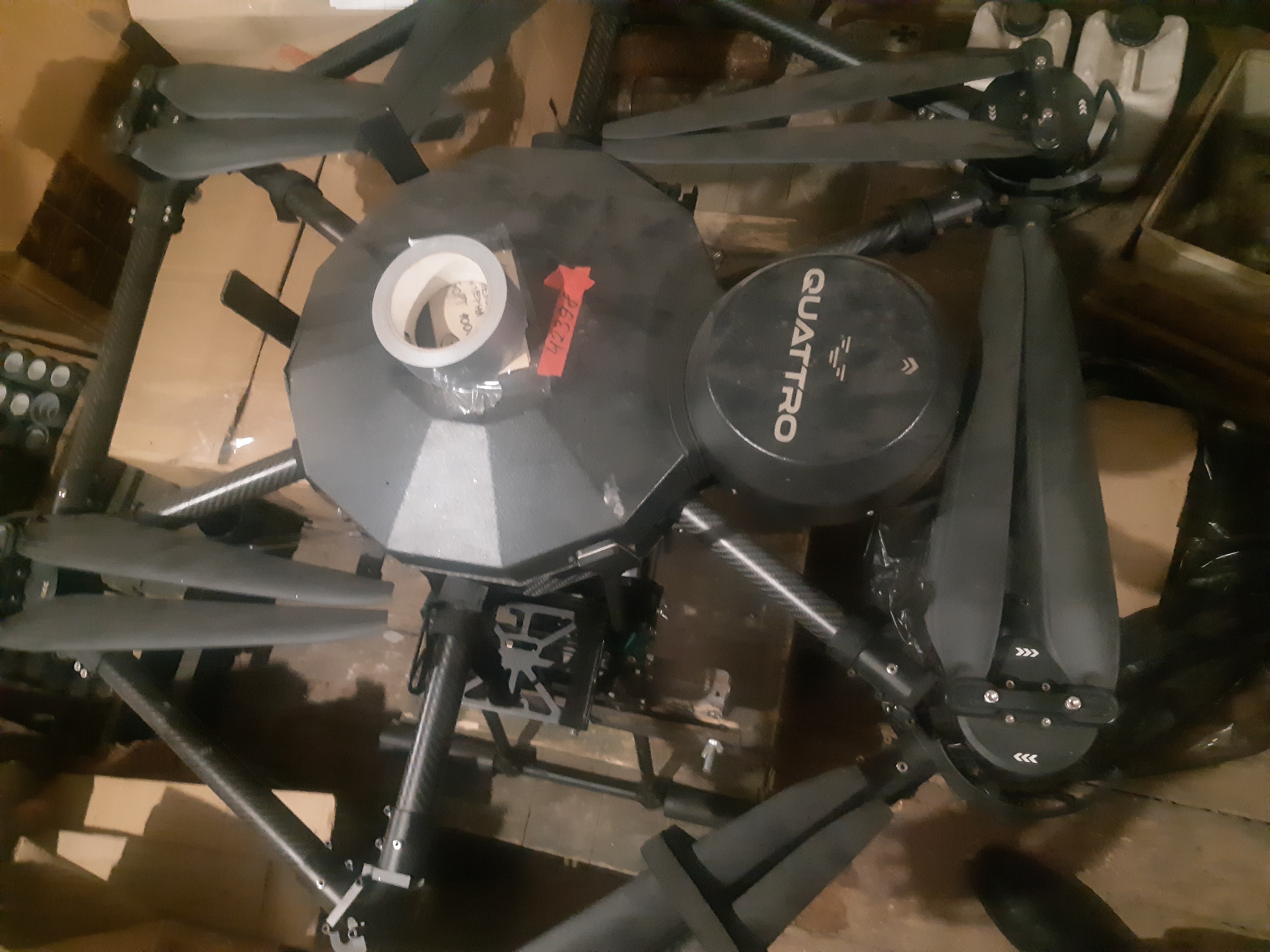
A Ukrainian heavy drone workshop — the technological backbone of deep strikes and defence.Vytautas Bruveris / Arch Frontline
Which factor and which process should we watch most closely in the nearest future?
— I think that particular significance will have the fact, how the war in the Middle East ends. Because that war may, in turn, lead to new escalation in new regions. If it does not end, it may lead to escalation in Asia. It is clear that preparations for this are already underway.
Escalation within the Russo-Ukrainian war itself will be of great significance — its forms, the results of Russian strikes on Ukraine, which may be prolonged. Though I do not think they can be destructive to the maximum extent, given the limits of Russia's own missile potential. The escalation of Ukraine's own actions may be of great significance, because in any case it means a reduction of the Russian Federation's capabilities. One way or another, this will lead to a point where Moscowwill be forced, sooner or later, to think about if not ending, then at least suspending the war due to the exhaustion of its economic and military-technical potential. That, too, may happen.
But it is not a matter of a single day. And once again, I want to say: after all, none of this is new.
We have been having this conversation while I was taking a stroll near the Church of the Saviour in Berestove. It is a church in the historical centre of Kyiv, not far from the Kyiv Pechersk Lavra, where, according to legend, Yuri Dolgoruky, Grand Duke of Kyiv, is buried. Yuri Dolgoruky, as you know, is considered the founder of Moscow. He was a duke of Suzdal who came to Kyiv, effectively breaking the resistance of the local nobility, and reclaimed the Kyivan throne, becoming Grand Duke of Kyiv — after which, again as legend has it, he was poisoned by the Kyivan boyars.
In other words, when you look at this church, these arrivals from the north, full of confidence that they have already succeeded in everything, only to end in the collapse of ambitions, are hardly any big political news at all. Kyiv's history, after all, has gone on somewhat longer than the history of Moscow itself. And we have already lived through all of this more than once.
Yes, a beautiful historical parallel. One small clarification. When you mentioned Asia, did you have in mind a possible attack by China on Taiwan?
— I think there could be various scenarios — from a conflict around Japan to a conflict around Taiwan or the Philippines. Perhaps not so much as a drive to establish control over Taiwan, but a desire to obtain a reaction from the United States to some direct, and I would say forceful actions by China, and by Russia for that matter, in the Asia-Pacific region.
Vytautas Bruveris is a Lithuanian journalist and analyst focused on Russia, Ukraine, and the geopolitics of the eastern flank. He conducts in-depth interviews with policymakers, military analysts, and foreign policy experts across Europe and beyond.
Sections
Popular topics
No results found
Try different keywords or check the spelling.
We use essential cookies to make the site work. With your consent, we also use cookies to analyze usage and improve the experience.
Privacy policy